Dog and Film Roll Logo Isolated
A Designer’s First Look: Charm with Quiet Confidence
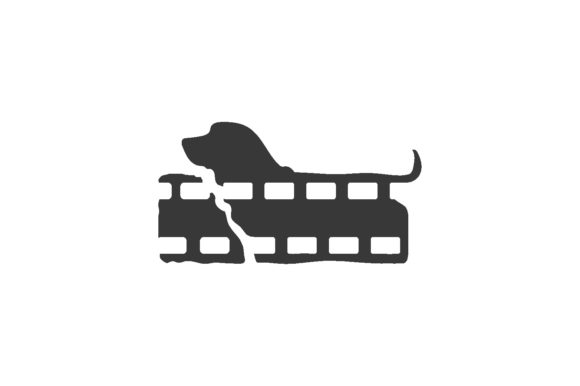
When I opened Dog and Film Roll Logo Isolated, what struck me wasn’t flash—it was focus. Clean silhouette, balanced negative space, and that subtle nod to analog storytelling (the film roll) paired with warm, approachable dog imagery. It doesn’t shout. It invites. As a designer who’s stitched hundreds of logos onto tote bags, baby onesies, and boutique aprons, I immediately pictured it on a natural linen tea towel—soft, intentional, quietly memorable. This isn’t a logo for loud streetwear drops; it’s for the craft business owner who values warmth over wow, authenticity over algorithm.
Where It Shines in Real Embroidery Projects
I tested Dog and Film Roll Logo Isolated as the centerpiece for a custom embroidered canvas tote—intended for a local indie photo studio’s holiday gift set. On medium-weight canvas with tear-away + cut-away stabilizer, the vector clarity translated beautifully into stitch definition. The dog’s ear and film roll’s sprocket holes held up cleanly at 3.5" wide—no blurring, no thread nesting. That’s thanks to its high-resolution foundation and thoughtful isolation (no background clutter to complicate hooping or digitizing).
It works especially well for:
- Custom apparel: Crisp on crewneck sweatshirts and relaxed-fit tees—especially when placed left-chest or centered on the back.
- Personalized gifts: Embroidered on organic cotton baby blankets or muslin pillow covers, it reads as tender and timeless—not cutesy or dated.
- Boutique merchandise: As an embroidered patch on denim jackets or canvas aprons, it adds brand personality without overwhelming the garment’s texture.
- Etsy listings & printable mockups: Because it’s delivered as full vector SVG/EPS, resizing for digital previews is seamless—no pixelation, no guesswork.
Where to Proceed Thoughtfully
Like any strong design, Dog and Film Roll Logo Isolated has sweet spots—and edges worth respecting. Its charm lies in clean lines and moderate detail, not micro-fine intricacy. So before stitching:
- Avoid ultra-small hoop sizes (<4" diameter) unless you’re scaling down to ~2". The film roll’s circular shape and dog’s facial suggestion rely on proportion—shrink too far, and subtlety becomes ambiguity.
- Test carefully on stretchy or thin fabric. While the vector files give you full control over digitizing, the original layout assumes stable substrate. On jersey or lightweight rayon, add lightweight fusible stabilizer *under* the fabric—not just behind—to prevent puckering around curved edges.
- Dark fabrics demand contrast checks. The logo’s balanced weight means it reads well in monochrome—but verify your thread color choice against black or navy backgrounds using a simple B&W mockup first. A charcoal gray thread can vanish where black would pop.
- Caps and curved surfaces need repositioning. The horizontal film roll + seated dog layout sits naturally on flat panels. For front-panel cap embroidery, rotate slightly or adjust vertical spacing to avoid distortion across the crown seam.
How It Elevates Your Finished Product
This isn’t just about legibility—it’s about resonance. When customers see Dog and Film Roll Logo Isolated stitched onto a handmade kitchen towel or a personalized baby onesie, they don’t just register “dog + camera.” They feel continuity: nostalgia, care, intention. That translates directly to perceived value. Buyers pay more for items that look thoughtfully designed—not templated. And because it’s isolated and vector-based, you retain full control over color, scale, and integration—whether you’re branding a small shop product or creating a cohesive line of holiday embroidery.
For Etsy sellers and craft fair vendors, this logo supports storytelling. Pair it with a short bio about analog photography or rescue dogs, and suddenly your embroidered tote isn’t just functional—it’s meaningful. That builds trust, repeat engagement, and word-of-mouth referrals.
Practical Notes Every Embroidery Designer Should Keep Handy
Before committing Dog and Film Roll Logo Isolated to your next project, do these five things:
- Stitch a test on scrap fabric matching your final substrate—especially if using textured weaves like burlap or terry cloth.
- Review stitch density in your digitizing software. Even with high-res source files, fill stitch areas (like the dog’s body) may need slight adjustment for breathability on summer-weight garments.
- Confirm hoop size compatibility. While the EPS file scales infinitely, your machine’s maximum hoop dimension sets real-world limits—measure before digitizing.
- Inspect small details at actual stitch size. Zoom in on the film roll’s edge and dog’s eye area in your embroidery software. If fine satin stitch zones appear fragile, consider simplifying or switching to a running-stitch outline.
- Verify licensing for commercial use. Since this is categorized under Logos and Graphics, confirm whether resale of finished embroidered items—or redistribution of modified versions—is permitted. When in doubt, contact the seller directly.
Final Thought: A Logo That Serves the Maker
Dog and Film Roll Logo Isolated doesn’t try to be everything. It’s focused, flexible, and faithful to its theme. That makes it unusually reliable—not just as a machine embroidery design, but as a quiet partner in your craft business. Whether you’re stitching for joy, gifting with meaning, or selling with intention, it holds space for your voice instead of drowning it out. In a landscape full of overdesigned, overcomplicated assets, that kind of restraint is rare—and genuinely useful.