Valentine Dog Couple Love
A Designer’s First Look: Sweet, Simple, and Stitch-Ready
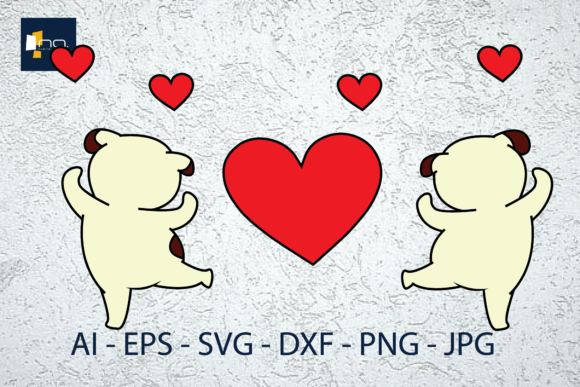
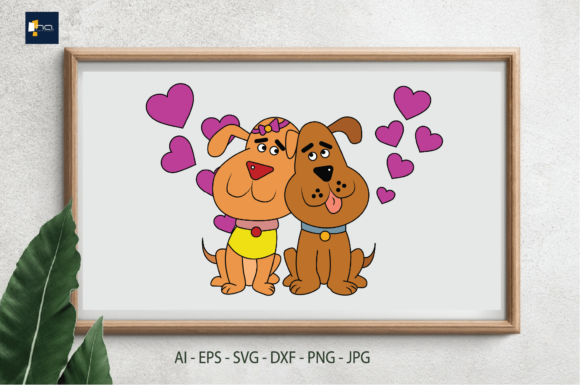
When I opened Valentine Dog Couple Love for the first time, I didn’t see just another holiday graphic—I saw a potential centerpiece for a handmade tote bag I’d promised a local boutique for their Valentine’s pop-up. The illustration features two stylized dogs facing each other, hearts floating between them, soft rounded lines, minimal facial detail, and gentle curves that suggest warmth without clutter. It reads instantly as affectionate, playful, and inclusive—no breed specificity, no gendered accessories, just quiet canine connection. That simplicity is its strength—and its first real test.
Where This Design Shines in Real Embroidery Projects
Valentine Dog Couple Love lands perfectly in projects where charm matters more than complexity: embroidered baby onesies (think soft pinks or mint on organic cotton), linen pillow covers for nursery decor, cotton tea towels for a small-batch kitchen brand, or unstructured canvas totes for a pet-friendly café’s seasonal merch. As a machine embroidery design, its clean silhouette holds up beautifully at 3–4 inches wide—the sweet spot for sweatshirt chest placements or apron pockets. I stitched a version onto a lightweight French terry sweatshirt using a medium-weight cutaway stabilizer, and the satin stitch outlines stayed crisp, the fill stitches laid evenly, and the negative space between the dogs kept breathing room—no puckering, no thread nesting.
It also works well as an applique design when paired with contrasting fabric scraps—great for craft fair patches or kids’ backpacks. And because it’s offered in SVG, DXF, and EPS10, it adapts cleanly to vector-based embroidery digitizing software if you need to tweak scale or add custom text. For Etsy sellers bundling digital embroidery files, this flexibility adds quiet value: one design, multiple entry points.
Where to Proceed with Care
This isn’t a design for ultra-fine detail work—or for surfaces that fight back. On stretchy fabrics like ribbed knits or thin jersey tees, the open shapes can distort unless stabilized aggressively (I recommend tear-away + topping). Curved surfaces—like the front panel of a structured cap—require careful hooping and possibly slight simplification of the heart elements to avoid registration drift. And while the PNG and JPG files are handy for printable mockups or social media previews, they’re not embroidery-ready; always start from the SVG, DXF, or EPS10 when digitizing your own version.
Dense fill areas—especially the dog bodies at larger sizes—can run heavy on stitch count, so check density before scaling beyond 5 inches. And if you're planning dark-fabric applications (navy sweatshirts, charcoal totes), test thread colors thoroughly: light pinks or pale grays may vanish without contrast stitching or underlay. The design doesn’t include tiny lettering or intricate linework, which is smart—it avoids common pitfalls for beginner embroiderers and keeps production consistent across small shop batches.
What It Adds to Your Handmade Product—and What It Doesn’t
Used thoughtfully, Valentine Dog Couple Love elevates perceived value without demanding expert execution. Customers recognize sincerity in its restraint: it feels handmade, not mass-produced. I’ve seen similar illustrations convert well on Etsy listings for personalized gifts—especially when paired with a short handwritten note about “a love that wags.” It supports brand consistency for pet-focused small shops, and its mood aligns naturally with holiday embroidery collections (Valentine’s, Adopt-a-Pet Month, even early spring gifting).
But it won’t carry a full collection alone. It’s an Illustrations-category asset—not a system. You’ll still need coordinating fonts, supporting motifs (bones, paw prints, simple hearts), and complementary color palettes to build cohesive product lines. As a Graphics file set, it’s strong as a standalone embroidery file or printable element—but don’t expect built-in layout guides, multi-position variants, or layered color separations unless confirmed in the file package.
Practical Notes Every Embroidery Designer Should Run Through
- Test first—always stitch Valentine Dog Couple Love on scrap fabric matching your final substrate, especially if using textured weaves or blends.
- Confirm hoop size—the composition fits comfortably in a 4×4 hoop at standard scale, but verify before loading into your embroidery machine.
- Review stitch density—if digitizing yourself, reduce fill density slightly for lightweight fabrics to prevent stiffness.
- Inspect small details—the hearts and ear contours are forgiving, but zoom in on your embroidery software to ensure no stray nodes or overlapping paths.
- Try black-and-white mockups—this design relies on shape and rhythm, not tonal nuance, so grayscale previews reveal clarity issues fast.
- Check licensing—since it’s labeled “INSTANT DOWNLOAD—DIGITAL PRODUCTS,” confirm whether commercial use (e.g., selling finished embroidered totes or digital embroidery files) is permitted before listing on Etsy or at craft fairs.
- Use proper stabilizer—cutaway for stable wovens, tear-away for lighter cottons, and fusible + topping for knits.
Final Thought: A Quietly Confident Choice
Valentine Dog Couple Love won’t shout—but it doesn’t need to. In a market saturated with overdesigned holiday motifs, its balance of sweetness and simplicity makes it unusually versatile. It works for the craft business owner stitching 10 baby onesies for a local adoption agency, the apparel decorator adding subtle charm to a boutique’s limited-run sweatshirts, or the Etsy seller bundling clean digital embroidery files for fellow makers. It’s not flashy. It’s thoughtful. And in embroidery—where every stitch carries intention—that’s exactly what builds trust, repeat customers, and quietly joyful finished products.