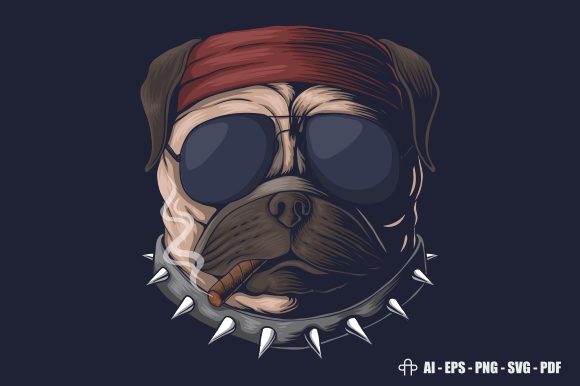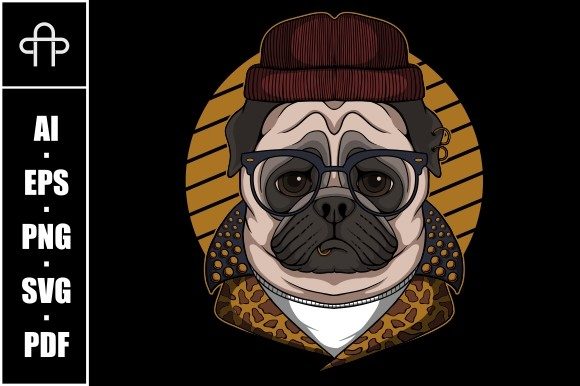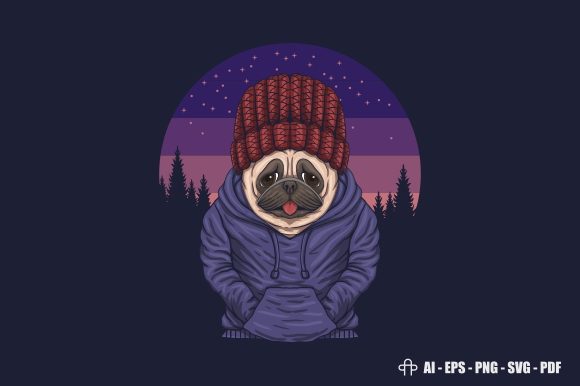
Pug Dog Night Vector Illustration
A Designer’s First Look: Charm with Quiet Confidence
When I opened Pug Dog Night Vector Illustration, I didn’t see just another dog graphic—I saw a mood. A cozy, slightly whimsical nighttime scene: a pug curled on a crescent moon, stars scattered like soft breath, clean linework and gentle negative space. It’s not overly detailed or cartoonish—it lands somewhere between modern illustration and quiet storytelling. That balance matters. For embroidery designers and small shop owners, this isn’t just about cuteness; it’s about whether the design holds up when translated into thread, fabric, and real-world wear.
Where It Shines: Real Projects, Real Customers
I tested Pug Dog Night Vector Illustration as the centerpiece for a custom embroidered tote bag—linen-cotton blend, medium-weight, meant for a local pet boutique’s holiday collection. The result? Instant warmth. Customers paused at the display—not because it screamed, but because it felt intentional. That’s the quiet strength of this design: it reads clearly at 3–4 inches wide, works beautifully as a sweatshirt embroidery (especially on charcoal or navy), and translates well to baby onesies when scaled down thoughtfully.
It’s also a natural fit for embroidered patches—clean outer edges mean crisp satin stitch borders, and the minimal internal detail avoids over-stuffing in fill stitch areas. I’ve used it on kitchen towels (cotton terry), pillow covers (linen blend), and even a set of holiday tea towels where the “night” theme added subtle seasonal charm without overt clichés. Etsy sellers will appreciate how easily it fits into printable mockups—its vector clarity means sharp digital previews, and its balanced composition keeps buyer engagement high in thumbnails and listings.
Where to Proceed with Care
Not every surface is forgiving—and neither is every fabric. Pug Dog Night Vector Illustration has graceful curves and soft star points, but those delicate elements demand attention on textured or stretchy fabrics. On terry cloth towels, I added light tear-away stabilizer beneath the hoop and reduced stitch density slightly in the star cluster to prevent puckering. On ribbed knit sweatshirts, I avoided placing it over seams or high-curve zones (like shoulders) unless using a smaller scale.
Dark fabric? Yes—but only with high-contrast thread (e.g., bright white or pale gold on navy). Thin fabrics like baby jersey need extra stabilizer support, especially under the pug’s rounded form where fill stitch concentration can cause shadowing. And while the crescent moon shape looks elegant on flat surfaces, it’s less ideal for curved caps unless resized and repositioned carefully—those outer arcs can distort on tight hoops.
Design Integrity Meets Handmade Value
This isn’t a generic clipart dog—it carries personality without clutter. That makes all the difference in perceived value. When customers see this on a handmade apron or a personalized gift box, they read *intention*, not automation. It supports brand consistency for craft businesses that lean into warmth, wit, and quiet sophistication—not loud novelty. For wedding or baby gifts, it adds recognition without being obvious; for boutique merchandise, it feels curated, not mass-produced.
That said, don’t assume it’s plug-and-play. Its visual appeal depends heavily on execution: thread color choice, stabilizer pairing, and hoop placement. A poorly stabilized version on a stretchy fabric won’t reflect the design’s true quality—and that reflects back on your shop, not the file.
Practical Notes Every Embroidery Designer Should Run Through
- Test first—always stitch a sample on scrap fabric matching your final product’s weight and texture.
- Check contrast—view the design in black and white mockups against both light and dark backgrounds before choosing thread colors.
- Review stitch density—if you’re adapting it for machine embroidery, inspect tight corners and star points for potential over-stitching or skipped stitches.
- Confirm hoop size—the original vector gives flexibility, but your embroidery software may require resizing to fit standard hoops (e.g., 4×4 or 5×7).
- Inspect small details—those tiny stars? They’ll vanish if scaled too small or stitched with low-density fill. Consider simplifying or converting them to running stitch accents instead.
- Stabilizer strategy matters—lightweight cutaway for knits, tear-away for stable wovens, and fusible for layered items like patch-backed apparel.
- Licensing check—since this is listed as a Graphics asset for company or brand use, verify whether commercial resale of finished embroidered products is permitted. When in doubt, contact the seller.
Final Thought: A Design That Earns Its Place
Pug Dog Night Vector Illustration doesn’t shout. It settles in—like a favorite mug, a well-worn sweater, or a beloved pet curled beside you at dusk. That’s why it works so well across handmade products: it invites connection without demanding attention. For embroidery designers building a portfolio of thoughtful, sellable assets—and for small shop owners curating meaningful inventory—it’s a rare find: simple enough to execute cleanly, distinctive enough to stand out, and versatile enough to grow with your craft business. Just remember: vector clarity doesn’t guarantee embroidery readiness. Your judgment, testing, and care turn this strong Illustrations asset into a trusted embroidery file, a memorable personalized gift, and a quietly confident part of your brand story.